The Differences Between Psychiatrists and Therapists
Health Articles
- posted on
- Comments Off on The Differences Between Psychiatrists and Therapists


Many people use the terms psychiatrist and therapist interchangeably, but they are actually very different professionals who approach mental health care in distinct ways. Understanding the differences helps you figure out which type of provider you might need, or whether you need both. A psychiatrist and licensed therapists can be part of the same treatment plan, each bringing different expertise to your care. Knowing what each does and how they differ will help you make informed decisions about your mental health.
Education and Training Differ Significantly
Psychiatrists are medical doctors. They earn an MD or DO degree, complete medical school, and then complete additional training in psychiatry. This medical background means psychiatrists understand the biological basis of mental illness and how the body’s systems interact with mental health. They can order blood tests, perform physical exams, and consider how physical health conditions might contribute to mental health problems.
Licensed therapists, by contrast, have graduate degrees in psychology, social work, counseling, or related fields, but they are not medical doctors. A licensed therapist might have a master’s degree or doctorate in psychology or counseling, but their training focuses on talking therapy, behavioral change, and psychological principles rather than medical science. Their education is rigorous and extensive, but fundamentally different from a psychiatrist’s training.
Medication Is the Key Difference
The most significant practical difference is that psychiatrists can prescribe medication, and most licensed therapists cannot. If someone needs an antidepressant, anti-anxiety medication, or other psychiatric drugs, they need to see a psychiatrist or another medical doctor. A psychiatrist evaluates symptoms, considers medical history, and determines whether medication might help.
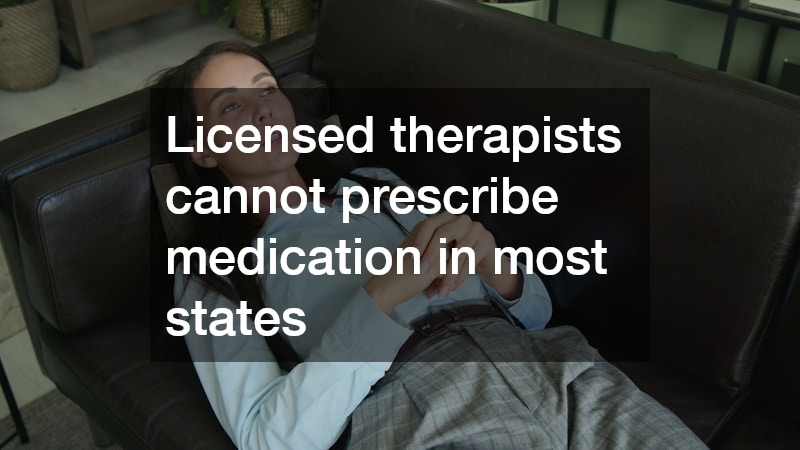
Licensed therapists cannot prescribe medication in most states, though a few states have expanded prescribing authority for certain mental health professionals. This limitation does not make therapy less effective for many people. For some conditions and situations, therapy alone is the best treatment. For others, medication alone is insufficient, and therapy is necessary. Many people benefit from both.
How They Approach Treatment
A psychiatrist typically spends time understanding your symptoms and history, then decides whether medication might help. Follow-up appointments often focus on how the medication is working, whether side effects are manageable, and whether dosage adjustments are needed. The appointments are usually shorter and more medically focused than therapy appointments.
Licensed therapists spend much longer with you during sessions, usually fifty minutes per hour. The focus is on talking about what is going on in your life, identifying patterns, learning coping skills, and gradually changing thoughts and behaviors. Therapy involves more conversation, more exploration of your history and experiences, and more emphasis on your role in creating change.
When You Need Which
If you are experiencing severe depression, bipolar disorder, psychosis, or other conditions where brain chemistry is significantly disrupted, seeing a psychiatrist makes sense. You need someone trained to understand medication and its effects on your brain. If your primary concern is anxiety and you want to learn coping skills and understand your triggers, a licensed therapist might be the right choice.
Many people need both. Someone might see a psychiatrist monthly to manage medication while seeing a therapist weekly to work through the psychological aspects of their condition. This combination often produces better results than either alone. A psychiatrist handles the medication, while licensed therapists help with everything else.
Cost and Insurance Considerations
Psychiatrist appointments are often more expensive, but insurance usually covers them because they are doctors. Licensed therapists’ costs vary widely depending on their credentials and location, and insurance coverage is variable. Some insurance plans cover therapy readily, others require substantial out-of-pocket costs.
Psychiatrist appointments are often shorter, sometimes just fifteen or thirty minutes. Therapy appointments are almost always fifty minutes. This affects both cost per appointment and the total time you spend in each type of care.
Finding the Right Provider
If you think you might benefit from mental health care, starting with your primary care doctor is reasonable. They can help determine whether you need medication evaluation or therapy or both, and they can refer you to appropriate providers. Your insurance provider can also give you lists of in-network psychiatrists and licensed therapists.
When looking for licensed therapists, pay attention to their specialties. Some specialize in anxiety, others in trauma, others in relationship issues. Finding someone with experience treating your particular concerns increases the likelihood that therapy will be effective.
They Can Work Together
The ideal scenario for many people is a treatment team. A psychiatrist manages medication while licensed therapists help with behavioral change, coping skills, and processing experiences. Communication between providers is important, though they need your permission to discuss your care.
Some people need a psychiatrist only, some need only licensed therapists, and some benefit from both. The key is figuring out which approach fits your situation. If you are unsure, starting with your primary care doctor or licensed therapists can help clarify what you need. Both psychiatrists and licensed therapists play important roles in mental health care, and often work most effectively when coordinated. There is no single right answer, just what works best for your unique situation and needs.