How to Make Sauerkraut for Delicious, Gut-Friendly Fermentation Every Time
Health Articles
- posted on
- Comments Off on How to Make Sauerkraut for Delicious, Gut-Friendly Fermentation Every Time
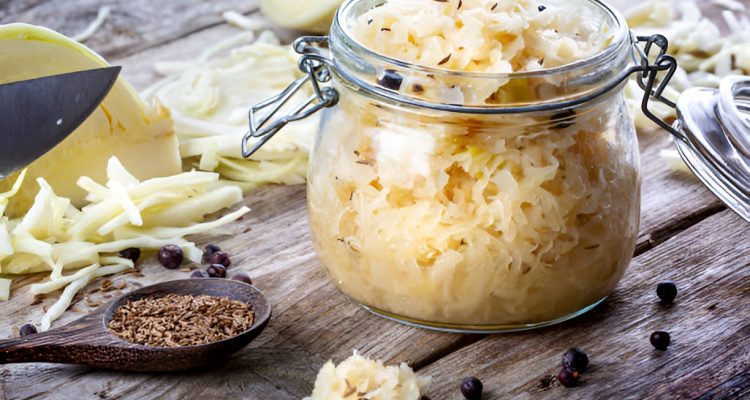

- Sauerkraut is a gut-health powerhouse – Packed with probiotics, fiber, and vitamins, it supports digestion, reduces inflammation, and strengthens immunity.
- Homemade sauerkraut is best – Freshly fermented cabbage contains more live cultures than store-bought versions and can be customized to taste.
- Simple ingredients and tools are all you need – Cabbage, salt, optional flavorings, a jar, and a weight are enough to make your own sauerkraut at home.
- Fermentation is flexible – Taste your sauerkraut as it ferments; 3–5 days gives a mild tang, while 2–4 weeks produces a stronger flavor.
- Proper technique matters – Massage cabbage, keep it submerged under brine, maintain clean tools, and store finished sauerkraut in the fridge for best results.
- Daily servings improve gut and immune health – Start with 1–2 tablespoons and gradually increase to ¼–½ cup as your system adjusts.
- Experiment with flavors – Add garlic, dill, carrots, ginger, apples, or beets to keep your sauerkraut tasty and enjoyable.
Fermented foods are more than just a trend—they’re a powerhouse for your gut health and immune system. Among them, sauerkraut stands out as a simple, affordable, and incredibly versatile option. In this guide, we’ll show you how to make sauerkraut at home, why it’s good for your body, and tips to make it delicious every time.
Why Sauerkraut is Great for Your Gut
Gut health is essential for digestion, energy, and even mental clarity. Sauerkraut is packed with probiotics, which are beneficial bacteria that help maintain a healthy gut microbiome.
Some benefits include:
- Supporting digestion and nutrient absorption
- Strengthening the immune system
- Reducing inflammation in the gut
- Potentially improving mood and mental health
Unlike store-bought versions, homemade sauerkraut is live-culture rich, which means you get the maximum gut-health benefits.
What You Need to Make Sauerkraut
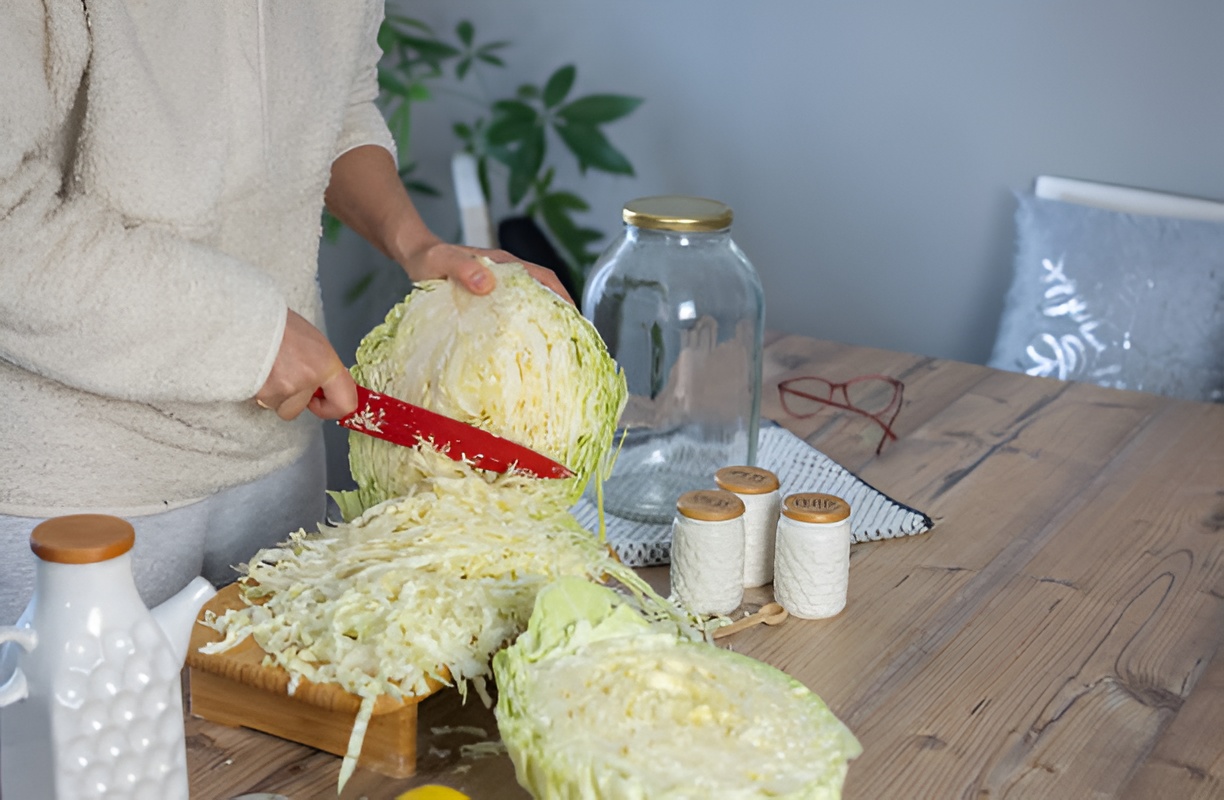
Making sauerkraut is simple and requires only a few ingredients and tools:
Ingredients:
- 1 medium head of cabbage (about 2 pounds)
- 1–2 tablespoons of sea salt or kosher salt
- Optional: caraway seeds, garlic, or shredded carrots for extra flavor
Tools:
- Large mixing bowl
- Sharp knife or mandoline slicer
- Mason jar or fermentation crock
- Weight to keep cabbage submerged (fermentation weight or small glass jar)
- Cloth or lid to cover
How Does Sauerkraut Fermentation Work?
Fermentation is the process where naturally occurring bacteria turn sugars into lactic acid. This is what preserves the cabbage and gives it that signature tangy flavor. Understanding this process is key if you want to learn how to make fermented cabbage at home.
When making sauerkraut, the salt draws water out of the cabbage to create brine. The anaerobic environment (no air) encourages the growth of beneficial bacteria while inhibiting harmful bacteria.
Step-by-Step Guide: How to Make Sauerkraut at Home
Follow these steps to make your own gut-boosting sauerkraut:
- Prepare the cabbage: Remove outer leaves, then cut the cabbage into quarters. Slice thinly with a sharp knife or mandoline.
- Massage with salt: Place the cabbage in a large bowl, sprinkle with salt, and massage for 5–10 minutes until it starts releasing liquid.
- Add optional flavorings: If desired, mix in shredded carrots, garlic, or caraway seeds.
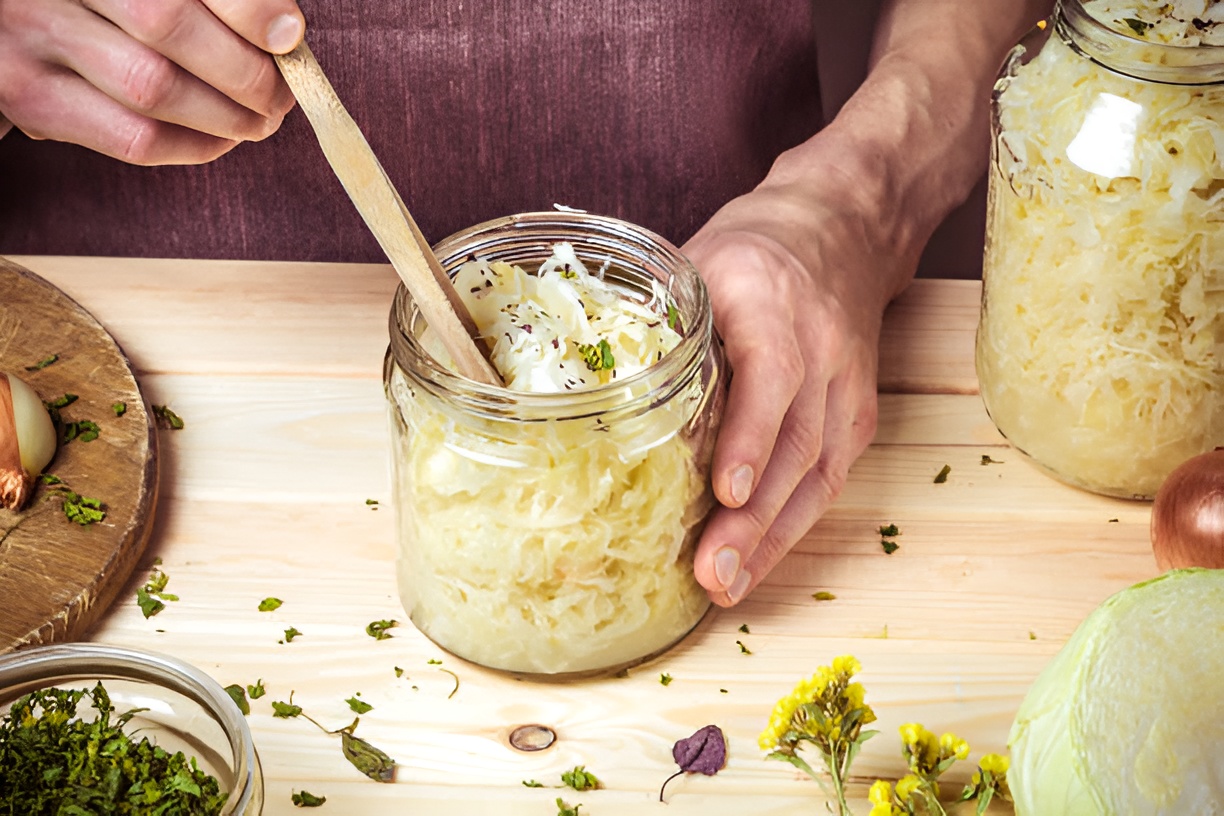
- Pack into jar: Tightly pack the cabbage into a clean jar, pressing it down so the brine rises above the cabbage.
- Weigh it down: Use a fermentation weight or smaller jar to keep cabbage submerged under the brine.
- Cover and ferment: Cover the jar with a cloth or loose lid to allow gases to escape. Leave at room temperature, away from direct sunlight.
- Check daily: Press down the cabbage if needed to keep it submerged. Taste after 3–5 days; fermentation can last up to 4 weeks depending on your preference.
- Store in the fridge: Once it reaches the desired flavor, replace the cloth with a lid and store in the refrigerator for up to 6 months.
How Long Should You Ferment Sauerkraut?
The fermentation time depends on your taste and the temperature of your kitchen. Cooler rooms slow fermentation, while warmer spaces speed it up.
- 3–5 days: Mildly tangy, still crisp
- 7–10 days: Balanced flavor with a slight tang
- 2–4 weeks: Strong, fully developed tang
Always taste your sauerkraut rather than relying strictly on time.
How Much Sauerkraut Should You Eat Daily?
Adding sauerkraut to your diet doesn’t require huge servings to get benefits. For gut health:
- Start with 1–2 tablespoons per day
- Gradually increase to ¼–½ cup as your digestive system adjusts
- Combine with a balanced diet rich in fiber and prebiotics for best results
Common Questions About Homemade Sauerkraut
Is it safe to eat raw sauerkraut?
Yes, raw sauerkraut is safe and full of probiotics. Avoid cooking it at high heat, as this destroys the beneficial bacteria.
What if my sauerkraut molds?
White film or bubbles are normal, but fuzzy green, black, or pink mold means it should be discarded. Keep cabbage submerged and use clean utensils.
Can I reuse the brine?
You can use the brine to kickstart a new batch, but fresh cabbage and proper hygiene are important to avoid contamination.
Will it taste salty?
Salt draws out liquid but doesn’t make the sauerkraut overly salty. Taste before adding more salt, as flavors develop during fermentation.
Flavor Variations to Try
Experimenting with flavors keeps your daily gut-friendly snack interesting. Some options include:
- Garlic and dill: Classic tangy and aromatic
- Carrot and ginger: Adds sweetness and spice
- Apple and juniper berries: Slightly fruity with herbal notes
- Beets and horseradish: Earthy and zesty
Tips for Perfect Fermentation Every Time
Use fresh, firm cabbage
Choose a cabbage that feels heavy for its size and has tightly packed leaves. Avoid cabbage with brown spots, soft areas, or signs of wilting, as these can affect both the texture and the fermentation process. Fresher cabbage produces crispier, more flavorful sauerkraut.
Always weigh down cabbage
Keeping the cabbage submerged under the brine is essential. Any cabbage exposed to air can develop mold or an off taste. Use a fermentation weight, a small jar, or even a clean rock to ensure everything stays submerged.
Keep your workspace and jars clean
Although fermentation naturally encourages good bacteria, starting with clean tools and containers reduces the risk of contamination. Wash your hands thoroughly, rinse jars with hot water, and avoid using soap that leaves residues, which could interfere with fermentation.
Taste periodically
Fermentation isn’t a fixed process—your kitchen temperature, the size of cabbage slices, and the salt ratio all influence how quickly it develops flavor. Start tasting after 3–5 days and continue until it reaches the tanginess you enjoy.
Store finished sauerkraut in the fridge
Once it reaches your preferred flavor, transfer the sauerkraut to the refrigerator. Cold storage slows the fermentation, helping preserve the crisp texture and tangy taste for several months.
How Sauerkraut Boosts Immunity
A healthy gut is linked to a strong immune system. Sauerkraut provides:
- Probiotics: Stimulate the gut-associated lymphoid tissue, enhancing immune responses
- Vitamins C and K: Support immune function and overall health
- Fiber: Feeds good gut bacteria and improves digestion
Regular consumption of fermented foods like sauerkraut may help reduce the risk of common infections and support long-term health.
Serving Ideas for Sauerkraut
Sauerkraut is incredibly versatile. Try these ideas:
- Add a scoop to sandwiches or burgers for crunch and flavor
- Mix with roasted vegetables as a side dish
- Combine with eggs or tofu for a gut-friendly breakfast
- Use as a topping for soups or grain bowls
Common Fermentation Problems and How to Fix Them
Even with a simple recipe, homemade sauerkraut can sometimes turn out a little different than expected. A few small tweaks usually get it back on track, so you can enjoy crisp, tangy, gut-friendly cabbage every time.
Brine not forming
If your cabbage isn’t releasing enough liquid, it may not be fully massaged or salted. Massage the cabbage a bit longer until it starts to soften and release juice. If needed, add a small amount of water mixed with dissolved salt to ensure the cabbage is completely submerged.
Off smell
A naturally sour, tangy smell is a sign that fermentation is working. However, if you notice rotten, moldy, or ammonia-like odors, this indicates spoilage. Discard any batch that smells off to avoid potential health risks. Properly weighing down the cabbage and keeping it submerged under brine usually prevents this problem.
Soft cabbage
If your sauerkraut becomes overly soft or mushy, it could be fermenting for too long or in a temperature that’s too warm. Try fermenting in a slightly cooler location or checking your sauerkraut sooner next time. Crisp cabbage produces the best texture and flavor.
Why Homemade Beats Store-Bought Sauerkraut
- Higher probiotic content
- Customizable flavor
- No preservatives or added sugar
- More cost-effective in the long run
By making your own, you ensure maximum gut-health benefits while enjoying a fresh, flavorful product.
Final Thoughts
Making sauerkraut at home is simple, satisfying, and incredibly rewarding for your gut and immunity. Start small, experiment with flavors, and enjoy it daily as part of a balanced diet. With consistent use, you’ll notice benefits like improved digestion, stronger immunity, and even enhanced mood.
Start today and turn this humble fermented cabbage into a powerhouse of health.
